
Held

I am very grateful to be spending the pandemic with my husband of 35 years. Admittedly, having two of us working from home has posed some challenges, as has spending almost all of our time in the same house. However, the ability to turn to the other and say, “Hug?” with the absolute assurance that a hug will be provided is beyond price. Being held in the arms of someone I know loves me, even when we’ve just been having a disagreement, provides comfort and security that can be hard to find in our current turbulent world.

As much as I value the feeling of being held by my husband, some of that security is illusory. There is much that he cannot protect me from, no matter how much he might wish to. 

I am deeply grateful that I am also loved by one who truly can stand against anything and whose love can never be overcome. Paul put it most eloquently: 

For I am sure that neither death nor life, nor angels nor rulers, nor things present nor things to come, nor powers, nor height nor depth, nor anything else in all creation, will be able to separate us from the love of God in Christ Jesus our Lord. (Romans 8:38-39 ESV)

I may lose sight of God’s love. I may forget that I have this assurance. I may feel that earthly things are coming between me and God. Even when I allow things to interfere with my love for God, God’s love for me will stand. Always.

Even more than this, Jesus said he holds us and that no one can remove us from his grasp.

“My sheep hear my voice, and I know them, and they follow me. I give them eternal life, and they will never perish, and no one will snatch them out of my hand. My Father, who has given them to me is greater than all, and no one is able to snatch them out of the Father’s hand. I and the Father are one.” (John 10:27-30 ESV)

There is much to love in this passage. We hear Jesus, and we follow him, yet it’s not that we know him: he knows us. He knows us fully and completely, the good and the bad. Even so, he gives us eternal life and holds us securely. His love is not like ours, based on limited understanding, but rather a love that knows every flaw yet loves us more than anyone else ever could.

We are securely held by the one who is “greater than all.” No matter the challenges of life, no matter the hurt, no matter the loneliness: if we listen to Jesus and follow him, we’ll be in hands that are not just good, but perfect.

There’s a song by Casting Crowns that I love that talks about our tendency to be strong and try to control our circumstances when everything goes wrong. The name of the song is “Just Be Held,” and the message is to remember that God is still in control and holding us, so we need to “stop holding on and just be held.”

When everything is falling down around us, as it has been for many of us in these last few months, the answer is not in our strength but in the one who will always hold us.


Photo by Anastasia Sklyar on Unsplash

Finding Truth

Truth seems to be getting harder to come by in our world. Our social media feeds are full of fake news of all kinds. The political posts are easy to locate, of course. A few months ago, several of my Facebook friends posted a story about a politician’s tax proposal, expressing significant outrage. I felt compelled to debunk the story because it ignored how income tax rates actually work in the US. If we want to be outraged about a political candidate, we should all make sure that we’re being outraged about something that is real, not something that is simply inaccurate. Similarly, there have been plenty of posts about Covid-19 that can be proved false by doing the math.

Even setting aside politics, however, I find no lack of sensational stories that show up on my feed that have already been debunked by various fact-checking sites. They’ll disappear and then show up again a year or two later.

Why is that?

As we look at these stories, one thing that is true of all of them is that they are unusual or surprising. Most of them also invoke some other negative emotions: outrage, horror, disgust. It turns out that social media hasn’t caused some sudden change in humanity that makes us tell and listen to these stories. Rather, this is the same set of motivations that have set people whispering to one another about the actions of their friends and neighbors for the long history of our fallen world. In a word, it’s gossip.

Gossip is one of those sins that good, church-going Christians tend not to want to talk about much. After all, most of us have indulged in it on occasion. Sometimes we even use making prayer requests as an excuse for gossip: “Y’all, we need to pray for the Campbells. Their oldest daughter, Maisie, has been hanging around with the wrong crowd, and my youngest has heard that she’s been pale and having some trouble keeping her breakfast down, if you know what I mean.” Not all gossip-laden prayer requests are quite so blatant, but I would guess that most of us have at least heard a prayer request that was more gossip than legitimate request without trying to stop it. I would also speculate that some of us have shared a prayer request with details that weren’t ours to share, including details that were rumor more than fact.

Because most of us have indulged in gossip and we see it as harmless, idle talk, we tend to view gossip as a “lesser sin,” not something that we need to worry quite so much about confessing and avoiding. After all, Maisie Campbell’s sins are far greater and we’re much more concerned that she confess and repent. But what is God’s view of gossip?

And since they did not see fit to acknowledge God, God gave them up to a debased mind to do what ought not to be done. They were filled with all manner of unrighteousness, evil, covetousness, malice. They are full of envy, murder, strife, deceit, maliciousness. They are gossips, slanderers, haters of God, insolent, haughty, boastful, inventors of evil, disobedient to parents, foolish, faithless, heartless, ruthless. Though they know God’s righteous decree that those who practice such things deserve to die, they not only do them but give approval to those who practice them. (Romans 1:28-32 ESV)

We see gossip here in the middle of quite a list. Most things in these verses we quickly reject. We’re not evil, or God-haters, or malicious. We’re not going to murder anyone. However, Paul doesn’t distinguish among these different forms of sin. All of these things are “what ought not to be done.” All “who practice such things deserve to die.”  They’re all sin.

Of course, as Christ-followers, we know that deserving to die because of what we have done is not the final word. Christ has died for our sins. “If we confess our sins, he is faithful and just to forgive us our sins and to cleanse us from all unrighteousness,” (1 John 1:9 ESV). That is our amazing good news. However, when it comes to the “little” sins like gossip, we need to make sure we keep on reading. “If we say we have not sinned, we make him a liar, and his word is not in us” (1 John 1:10 ESV).

Gossip is only one of the “little” sins we indulge in, thinking they are not a big deal, but God has made it clear that all of our sins are a big deal. We must ask God to show us the sins still in our lives today. Then we should confess those sins and turn away from them. To avoid gossip, we must make certain that everything we say, whether in person or on social media, is not only true but also worth sharing.


Photo by Agence Olloweb on Unsplash

Our Firm Foundation

Even before the drama that is 2020, we lived in a world full of change and uncertainty.

Technological change is one of the most obvious things, especially to someone of my age and above. I remember the oohs and aahs of my classmates over the 4-color graphics in the Lemonade Stand game, the first program with color that was installed on the Apple II+ computers in my high school. I compare that to the stunning graphic realism of some modern games running on my laptop. Of course, the graphics are only possible because my laptop is far more powerful than any supercomputer from my college years. Even my phone is more powerful than those old supercomputers. I also remember when my husband’s boss got one of the early cell phones. It weighed several pounds and all you could do with it was make phone calls.

For someone who works in the computer world, as I do, the technological changes are exciting, but they can also be terrifying, given the realities of cybersecurity. The internet brings amazing opportunities for connectedness and horrific potential for harm.

While technology is first in my thoughts, because of my interests and profession, we would find no lack of other kinds of change in our world. Social change, both good and bad, abounds. Science of every kind progresses, with both intended and unintended consequences. We see economic and political change across the world. The same global interconnectedness that makes it easier to share the gospel to the ends of the earth makes it easier to spread a virus.

Small wonder that we Christians like to sing about our “Solid Rock” and “Firm Foundation,” in older hymns as well as modern worship songs.  

During this time of turmoil, I’ve been thinking about one of the Bible passages that talks about rocks and foundations. This is Jesus talking in the well-known Sermon on the Mount.

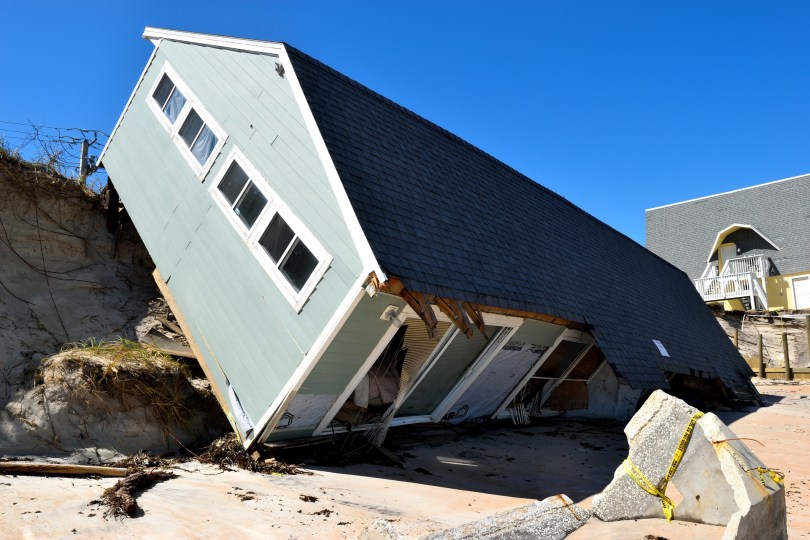
“Everyone then who hears these words of mine and does them will be like a wise man who built his house on the rock. And the rain fell, and the floods came, and the winds blew and beat on that house, but it did not fall, because it had been founded on the rock. And everyone who hears these words of mine and does not do them will be like a foolish man who built his house on the sand. And the rain fell, and the floods came, and the winds blew and beat against that house, and it fell, and great was the fall of it.” (Matthew 7:24-27 ESV)

I remember singing a song in Sunday School based on this passage, which seems to go by several different names, all about the wise man whose house stood firm and the foolish man whose house fell. We all loved that last line: “The house on the sand went smash.” There are some versions of the song that go on: “So build your life on the Lord Jesus Christ,” which is good, but still does not focus on the point Jesus is making here.

I think there are two things we have to take from this passage. The first is that the storms are coming. As Christians, we are sometimes surprised at the problems we face in life. After all, God is on our side, so shouldn’t we be protected from life’s problems? Unfortunately, that just isn’t Biblical. The rain falls, the floods come, and the winds blow the same for both the house on the rock and the house on the sand. 

There are exceptions when Jesus calms storms, but he warns us repeatedly of tribulation and persecution: of the storms of life. With those warnings, he makes a promise, not to take us out of the trouble, but to be with us, to help us stand firm.

The second concept we must focus on is the difference between the one who is like the wise man and the one who is like the foolish man: between the one “who hears these words of mine and does them” and the one “who hears these words of mine and does not do them.” Both hear. One does; one does not do. One obeys; one does not obey.

The storms are on their way, if they are not already in your life. Jesus says the firm foundation comes from hearing what he has said and doing it. While we think that obedience is harder in the midst of the storms, we often fall short during the easy times. We get distracted. We start to believe we can do things on our own. It is through our commitment to Christ and obedience in the calm that we build the firm foundation we need when the world is shaking.


Image by Paul Brennan from Pixabay

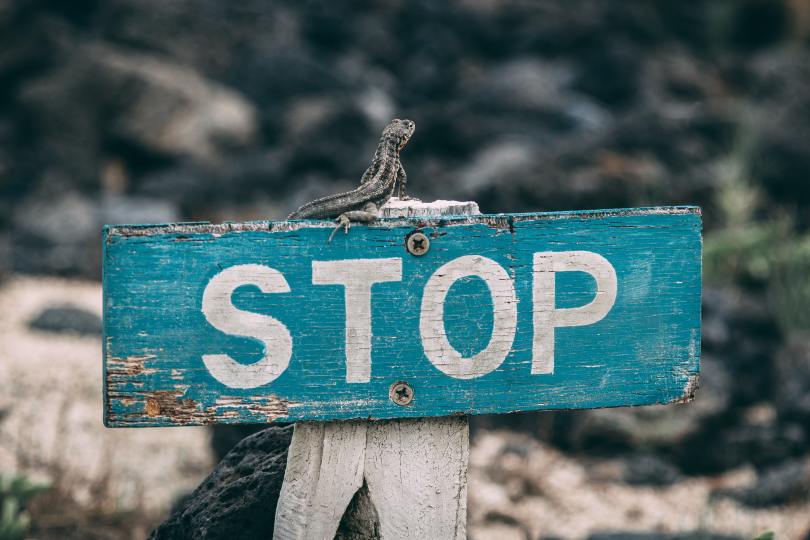
STOP!

Despite being in my home all of the time over the last few months, I find that life is racing by. During the past spring semester, that wasn’t surprising, since I had so much work to do. However, I still have that feeling even in this “relaxed” summer period. Hours melt into days that melt into weeks with remarkable speed, while I struggle to accomplish any of the things I intended to achieve during this break from classes. 

Causes for the phenomenon are easy to find: 

  • The sameness of days spent at home.
  • The news, with its many sources of concern and stress.
  • Family concerns, as some of my immediate family members who do not live in the same state struggle with health issues of various kinds.
  • The (too) many things I had hoped to accomplish over the summer.
  • Uncertainty, especially about the fall semester and preparing to teach when none of us really know what the circumstances will be when classes start (and, more importantly, several weeks after classes start).

With all of these things in my mind, I find myself racing from one task to the next, with even my Bible reading, prayer, and leisure activities feeling frantic. I’m just on a treadmill that is going way too fast.

The stresses of our current circumstances are real. As much as we may want to scream to the world to stop and give us a break, it has become quite clear that no breaks are coming any time soon.

I’m reminded of others whose problems were real. 

In 1 Kings 19, Elijah is running from the queen, Jezebel, who has sworn to kill him. God comes to him and listens to his complaint, but Elijah has to stop and listen before he can have the real conversation with God.

And he said, “Go out and stand on the mount before the Lord.” And behold, the Lord passed by, and a great and strong wind tore the mountains and broke in pieces the rocks before the Lord, but the Lord was not in the wind. And after the wind an earthquake, but the Lord was not in the earthquake. And after the earthquake a fire, but the Lord was not in the fire. And after the fire the sound of a low whisper. And when Elijah heard it, he wrapped his face in his cloak and went out and stood at the entrance of the cave. And behold, there came a voice to him and said, “What are you doing here, Elijah?” (1 Kings 19:11-13 ESV)

The dramatic, miraculous events are not when God speaks. Only after, in the quiet, in the stillness, does the communication happen.

In 2 Kings 6, Elisha and his servant are surrounded by a large army that has come to capture him. The servant is understandably frightened, so Elisha takes time to pray that the servant’s eyes be opened. The servant then sees that God is protecting them with “chariots of fire all around Elisha” (2 Kings 6:17b ESV).

 The night before the crucifixion, Jesus knows what is coming. He knows that he is about to be betrayed by one of his chosen followers. He knows that his followers will desert him, that he will suffer a terribly painful death. His response? To spend three hours in prayer.

I know this. I know that God is central to my peace. I know that “You keep him in perfect peace whose mind is stayed on you, because he trusts in you” (Isaiah 26:3 ESV). This is why I’ve worked hard to maintain my Bible reading and get back into Bible memorization. Even so, I don’t always feel God’s peace. I let the rushing take over even my time with God. 

We have to stop, to breathe, to take time, to listen. That’s hard in times like these, but absolutely necessary. We must obey the instruction: “Be still and know that I am God” (Psalm 46:10a ESV). That verse is well-known, but we often do not pay attention to its context. This psalm is about God’s power and protection in the midst of terrible things–disasters both natural and man-made.

God is our refuge and strength,
    a very present help in trouble.
Therefore we will not fear though the earth gives way,
    though the mountains be moved into the heart of the sea,
though its waters roar and foam,
    though the mountains tremble at its swelling. Selah
                               . . .
Come, behold the works of the Lord,
    how he has brought desolations on the earth.
He makes wars cease to the end of the earth;
    he breaks the bow and shatters the spear;
    he burns the chariots with fire.
“Be still, and know that I am God.
    I will be exalted among the nations,
    I will be exalted in the earth!”
The Lord of hosts is with us;
    the God of Jacob is our fortress. Selah
Psalm 46:1-3;8-11 ESV

Even n the midst of our current disasters, we are called to be still and to know that God is, in fact, God. He is in control. He is our refuge and our protection. His peace will be ours if we only stop and focus on him.


Photo by Jose Aragones on Unsplash