

Be Happy?

Over the years, I have sung in a number of different church choirs and praise teams. One constant across those experiences is the instruction to smile. Smile while you’re singing. Smile during the sermon. Be an example to the congregation; make sure they see you smiling.

There is some value to this instruction. It is good to be expressive when we are singing, whether in church or elsewhere. It’s probably not ideal to have a choir full of people frowning behind the pastor during the sermon.

At the same time, I have seen greater emphasis on these things in church contexts, and I think it’s part of the too common church culture that encourages Christians to present only the good to the world and to each other. We are supposed to always be joyful, so that means we should smile all the time, right?

Wrong!

I believe this is one of those areas where we have taken the Bible and over-simplified it, placing a burden on ourselves that God never intended for us to carry.

Certainly, God has called us to joy:

Rejoice in the Lord always; again I will say, rejoice. (Philippians 4:4 ESV)

Rejoice always, pray without ceasing, give thanks in all circumstances; for this is the will of God in Christ Jesus for you. (1 Thessalonians 5:16-18 ESV)

Finally, brothers, rejoice. Aim for restoration, comfort one another, agree with one another, live in peace; and the God of love and peace will be with you. (2 Corinthians 13:11 ESV)

However, as we learn to rejoice in the Lord at all times, we need to remember that he never called us to a fake display of emotions, nor did he forbid us to mourn authentically. In 2 Cor. 13:11 quoted above, the instruction to “rejoice” is followed by “comfort one another.” If we’re all happy, why would any of us need comfort?Paul also told us, “Rejoice with those who rejoice; weep with those who weep” (Romans 12:15 ESV). Jesus himself did that in the well-known shortest verse as he wept with Mary over her brother’s tomb even though he knew that the grief would not last much longer. The joy that God brings us is not a denial of grief and pain, nor is it just a smile we put on our faces. It is found when God works through us to overcome the grief and pain of life in this world.

I believe that joy is a choice and a process. We have to choose to experience the joy God calls us to, not only by choosing to follow God in the first place, but also on a daily basis. We are told, “Count it all joy, my brothers, when you meet trials of various kinds, knowing that the testing of your faith produces steadfastness” (James 1:2-3 ESV). This is not a matter of, “Oh, you’re a Christian now, so turn your trials into smiles.” Something that produces steadfastness (or perseverance or endurance) is not going to be fun or easy to go through. It’s going to be hard, even painful. James tells us to choose joy because we understand the outcome. Paul tells us to choose to rejoice in the Lord. 

The really good news is that joy is also a process. As we choose joy again and again, that joy becomes more natural. We learn that God does provide a peace and comfort that we cannot begin to understand. Paul says, “I have learned in whatever situation I am to be content” (Philippians 4:11 ESV). That didn’t happen overnight; we should not expect to feel our own joy and contentment instantly.

Life is hard, and there are many suffering right now. It doesn’t help to pretend to be something we are not. We are not called to put on a forced smile, but to make the authentic choice to trust God and rejoice in the outcome he will bring, showing compassion and empathy as we weep with those who weep.

Photo by Charles Etoroma on Unsplash
Surviving the Now

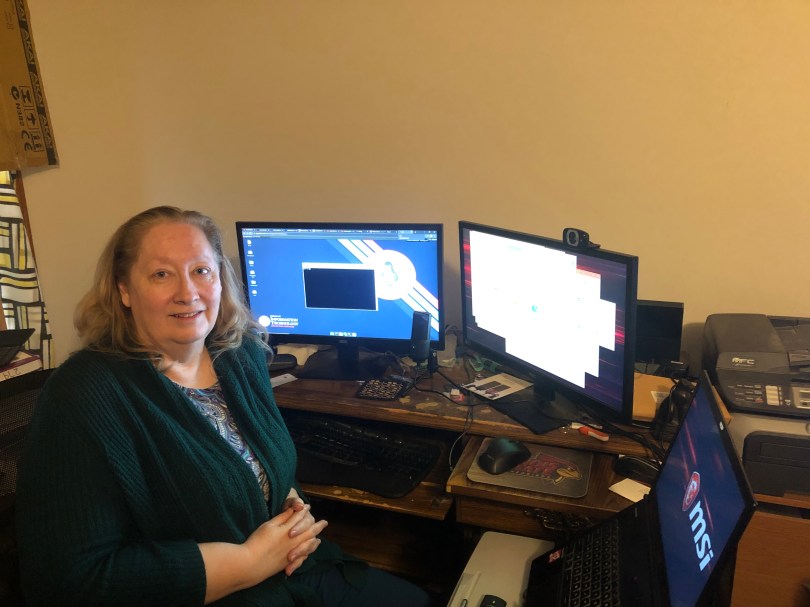
The past three months have been intense at my house. As I have mentioned in earlier posts, the semester was a challenging one to begin with: teaching full time for the first time in nearly a decade, including teaching a new class and one that is very familiar but that I hadn’t taught in since spring of 2013. Then I got the flu followed, as one might expect, by my husband getting the flu. We didn’t get tested, but we know influenza A was going around the community at the time, and our symptoms were classic influenza, including a couple of weeks of being wiped out. So if you wondered why I quit posting after mid-February, there’s your first answer. 

Of course, you are all familiar at some level with part of what happened next. As I finished recovering physically and began to get fully caught up with work over Spring Break, the new coronavirus started impacting our lives. I had an extra week of break in order to prepare for teaching my courses online. As someone who had never taught online before, I was grateful for the extra week of preparation, but I also greatly regretted the loss of class time as I worked to cram the necessary material into an already crowded final six weeks of the semester without overburdening students.

I had been told many times that teaching online takes more effort and more time than teaching face to face. I pretty much believed it, but now I truly know that it is true. In the struggle to give my students what they needed and fulfill the other essential responsibilities I had, many things fell to the wayside, including this blog. My memorization program tells me that I have 155 verses to review at present (after reviewing James 2:12-26 earlier today). The resolution about serious weekly Bible study will get resurrected later this week. I have watched my church’s online services. I’ve kept up with my daily Bible reading. I’ve fed my family. I’ve had weekly calls with my parents and sons. I’ve mourned my cat, who died just as this was all starting. Beyond that, my life has been too much news and work, lots of work.

As hard as the past weeks have been, I’ve been grateful. My family is richly blessed in this circumstance. I’m not thrilled about having to teach from home, but I can do it. My husband usually works from home. Only one of our close family members was furloughed from her job, and she and her husband are fine financially. As I watch the world around me, I have been tempted to envy those with extra time on their hands, but I am mostly moved by the pain I see in those who have been directly impacted by this virus as well as those who have suffered due to the shutdowns.

Having submitted the semester’s grades and looking at a far reduced workload for the next few months, I find myself with time, at last, to look around and ask what my role as a Christ-follower is in this current crisis. Part of that role is easy to see. People are suffering, both from the virus itself and from the resulting economic impact. As believers, we are to give to those in need. 

I think there are other roles that we have in our current circumstance. One of those is the role of truth seeker. When we were told that the truth would set us free, Jesus was primarily talking of himself as that truth. At the same time, we know that God is the creator of the universe we live in and that his word is true. Therefore, we can be assured that actual scientific fact can never contradict God’s truth. Scientific theory can. We can misunderstand either the Bible or the facts. However, the reality is that the Truth and the facts cannot be in disagreement, and I believe that gives me as a child of God the responsibility to seek a better understanding of both the facts and God’s truth as I walk through every situation in life, including our current circumstances.

As we seek and disseminate truth, however, we must never forget another of our roles. Jesus said, “Blessed are the peacemakers, for they will be called the children of God,” (Matthew 6:9 ESV). Just as we are told to share our faith with “gentleness and respect” (1 Peter 3:15 ESV), I believe that we need to display that gentleness in other areas of our lives. Gentleness is, after all, one of the fruits of the spirit. There are deeply committed Christians with many different beliefs about the virus and different responses to it, just as there non-Christians with a variety of such beliefs. What should distinguish those of us who are believers is how we express our views and how we treat those who disagree with us. Let us, as Christians, be known by our love, our gentleness, our concern and respect for others, and our hunger for truth.

This is a hard time for most of us in this world. How are you coping, and how are you seeking God in this challenge?