
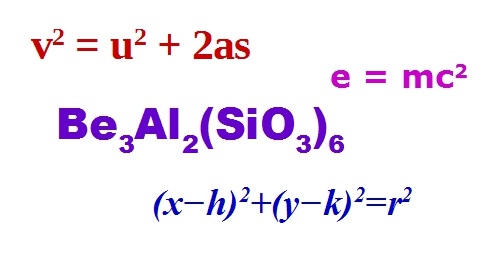
The Right Formula

My husband and I have been struggling with making some major life decisions in recent months. We’re looking at what our next steps are and when we should take those steps. A lot of work-related things and some pretty serious personal things have been slowly coming together to raise these questions.

Early on in this process, I had a chance to visit a dear friend who is one of my favorite Bible teachers and a strong prayer warrior. As we were talking, I expressed my frustration at not knowing what was next and not having a clue what the timing should be: is it this year; is it two years from now; am I just totally wrong about what’s next? I explained that with every major decision in my life to that point, God had very clearly indicated the way to go (not always as soon as I wanted, but certainly in time to make the decision) and given me great peace about the direction I was headed.

At this point, my friend said something that almost shocked me. She told me not to expect the same experience: that God might be planning to work with me in a different way. She said that God might even have me make the decision with his specific direction. My initial reaction was not positive, but as I talked with others, prayed, and read, I came to realize that she’s right. God may provide certainty about this big decision, but he wants me to work through things based on his general guidance and principles and in close communion with him, but using my own reason and emotion.

I had tried to reduce that direction from God to a formula where I pray and he answers with the kind of answer I want. That business of reducing interaction with God to a formula is always tempting but never effective and sometimes downright dangerous.

We see a church that is growing dramatically with many baptisms, and we try copying their programs, their music style, sometimes even their sermons. But it seldom works, because the growth is coming from a deeper place in which God works differently in different communities.

We want to become better Christians, so we read books that give us advice on when to read our Bibles and pray, what passages to read, how much to fast, etc. Those things may be useful (the spiritual disciplines that underly them are essential), but the specifics won’t make a difference. Only reading with one’s mind and soul open to learn and act on what is learned will transform. Only prayer from the heart truly matters. Jesus said, “On that day many will say to me, ‘Lord, Lord, did we not prophesy in your name, and cast out demons in your name, and do many mighty works in your name?’ And then will I declare to them, ‘I never knew you; depart from me, you workers of lawlessness.’” Matthew 7:22-23 (ESV).

This business of reducing God and our relationship with him to mere formulae is not a new phenomenon. In Acts 8, we see Simon the magician try to buy the disciples’ power, having already professed belief and been baptized. “But Peter said to him, “May your silver perish with you, because you thought you could obtain the gift of God with money! You have neither part nor lot in this matter, for your heart is not right before God. Repent, therefore, of this wickedness of yours, and pray to the Lord that, if possible, the intent of your heart may be forgiven you” Acts 8: 20-22 (ESV). We may separate ourselves from Simon because he was after his own earthly gain. But am I so different in my desire to have God tell me what to do next? That’s partly out of a desire to serve him in the next phase of life, but it’s partly for my own gain and certainly my own peace of mind. 

Our eye must stay on the relationship with God and never how to get things from the relationship. Any time we start focusing on the fruit instead of the vine, we risk losing the heart of the matter.
My Way

Christians can sometimes be a bit too concerned about asking God for direction over every detail of our lives. Don’t get me wrong, I believe that God cares about every detail of our lives and that we should make all of our little decisions in accordance with his will. However, there are two different ways in which we sometimes over ask for direction.

One of those is asking God to clearly show us what to do in every small decision. God actually isn’t interested in robots who just follow his programming at all times. If he were, he would never have made us. However, I’m going to save this concept for another week. There is also a danger in ask for God’s direction when we already know the answer, but we just don’t like it. This is dangerous because God will eventually let us have our way.

Don’t believe me? Let me tell you a story about a prophet. I’m going to call him Joe, because I want you to think about the story without jumping to the end. So Joe is a prophet of God, but not an Israelite. A king who is concerned about the Israelites sends people to Joe and asks him to come curse the Israelites. Then God come to Joe and asks what’s going on. Joe explains. God very clearly says “You shall not go with them. You shall not curse the people, for they are blessed” Numbers 22:12 (ESV). So Joe tells his visitors that he can’t come. So far so good. However, the story doesn’t end there. I want you to note that God didn’t say anything situational or ambiguous. He gives a blanket statement with no wiggle room.

Well, the king was not excited about Joe’s response, so he sends another group of even more important people. Now here’s where Joe gets it wrong. He starts by telling this group that he can’t do more than God tells him to, no matter what he is offered, but then tells them to stay so that Joe can ask again. Now there is no reason for Joe to ask. He knows the answer. My guess is that he is hoping that God will give him a little wiggle room so he can get some of the riches the king is offering. After all, have you ever asked God about something you really wanted that you knew wasn’t his will, but you really wanted a loophole? I have.

Now here is where things get interesting. God tells Joe he can go, but warns him not to do anything more God allows. However, God puts an angel in Joe’s path with instructions to kill him, instructions which are not actually carried out because Joe’s donkey can see the angel. By the way, for those who haven’t figured it out, Joe’s real name is Balaam. So Balaam and the donkey and the angel have a conversation, and eventually Balaam goes on his way.

Now, I personally don’t believe God was actually intending for Balaam to die. He knew the donkey would stop; he allowed the donkey to see the angel and to explain things to Balaam. Instead I think God was teaching Balaam a lesson: a lesson he still hasn’t quite learned at this point, and a lesson that we could benefit from.

Balaam is brought to a place where he can see some of the Israelites. He has Balak (the king) offer sacrifices and goes to meet God to see what he should say. Balaam then blesses the Israelites. Then Balak takes Balaam to another of a different part of the people of Israel. Balaam has Balak over another sacrifice and he goes to talk to God again. And, once again, Balaam blesses the Israelites. (Surprise, surprise). It is at the next point of the story that I believe Balaam finally gets it. Balak takes him to a third view, and the sacrifices happen again. However, here the story changes slightly: “When Balaam saw that it pleased the Lord to bless Israel, he did not go, as at other times, to look for omens, but set his face toward the wilderness. And Balaam lifted up his eyes and saw Israel camping tribe by tribe. And the Spirit of God came upon him,” Numbers 24:1-2 (ESV). And then Balaam proceeds to bless Israel the third time. I believe that this is where Balaam finally gets it. There’s no reason for him to seek direction; God made things clear from the beginning. The only reason to ask was in hope that God would change his mind or allow Balaam his own way. Now Balaam has aligned his thinking and desires with God’s.

Balaam isn’t the only person in the Bible who did this kind of thing. Even Moses, who was the greatest of Old Testament figures, argues with God quite a bit at the burning bush. If you don’t believe me, reread Exodus 3 and 4. Note that Aaron is appointed as spokesperson for Moses only because Moses insists, even after God promises “I will be with your mouth and teach you what you shall speak” Exodus 4:12b (ESV). Ever wonder what might have been different if Moses had trusted God there? I think of things like the golden calf episode where Aaron gets things completely wrong. Moses, of course, isn’t being subtle and asking for direction when he knows better: he’s just flat arguing with God. And God lets him have his way, just as he allowed Balaam to go with Balak’s messengers.

Let’s ask God for direction, but let’s be careful that we’re not trying to get our own way. The worst might happen: God might give it to us.

Books and Covers

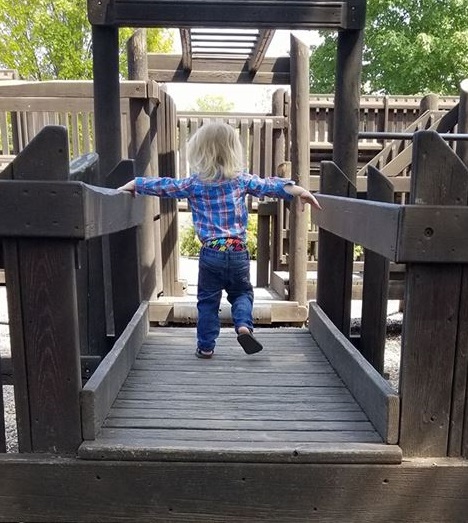
I have a two-year-old grandson. Like any grandson of that age, he is cute, adorable, and occasionally frustrating. Unlike many, he is large (huge) and has advanced gross motor skills. A couple of months ago, when he was right 23 months old, my daughter-in-law took him in to a clinic. When the nurse came in to the room, she immediately chewed Sara out for allowing the child to have a bottle at his age, explaining that it is not recommended for children to use bottles so long. A few minutes later, the nurse asked exactly how old the child was. Upon learning that he was 23 months, she expressed her surprise, saying that she thought he was at least two and a half and probably three.

A lot of us don’t really like the verses in the Bible about judging others. When we read Matthew 7:1-5 about judging other and  specks and logs, we want to believe that we don’t really have logs in our eyes; it’s those other Christians who misjudge. After all, judging others is kind of fun. It makes us feel good about ourselves when we point out the inadequacies of those around us. So we tend to justify our judgment by looking at other verses that encourage us discern good and evil and to avoid Christians who are are living in open, acknowledged sin.

I think there is something to be learned from the story of my grandson and the nurse. The nurse was not entirely wrong. A three-year-old probably shouldn’t be drinking a bottle in her clinic. On the other hand, she applied her knowledge of what was good and bad for a child incorrectly because her vision was incorrect, leading her to misunderstand the situation.

After telling us not to judge each other, Jesus went on to talk about specks and logs in our eyes. I think it’s significant that vision was involved, because part of his point is that we don’t see clearly. The reality is that our human eyes never see the whole picture. God sees into the heart; we do not. We may know whether or not something is a sin. We may not know whether the person doing it is even a Christ-follower, what other sins they’re working on overcoming, or many other things about their journey.

Even worse, when we judge by appearances alone, we may think something connotes sin when it simply doesn’t. That tattoo may be from a different period in someone’s life or it may be a symbol of a step on their journey with Christ. That glass of wine or bottle of beer is actually not a sin in and of itself (Biblically speaking), and it does not prove whether there is a pattern of drunkenness that would be sinful from a Biblical perspective.

There’s an old saying about judging books by their covers. It’s a far more dangerous thing to judge a human being by appearance.

Know what is good and what is evil, but don’t assume that you know what is going on in another person’s heart and life.

Judge not, that you be not judged. For with the judgment you pronounce you will be judged, and with the measure you use it will be measured to you. Why do you see the speck that is in your brother’s eye, but do not notice the log that is in your own eye? Or how can you say to your brother, ‘Let me take the speck out of your eye,’ when there is the log in your own eye? You hypocrite, first take the log out of your own eye, and then you will see clearly to take the speck out of your brother’s eye” Matthew 7:1-5 (ESV)